
A root canal is a dental procedure that many people dread, but it’s often the best option to save a tooth that’s been damaged or infected. It’s essential to understand the procedure, potential symptoms, and recovery process so that you can make an informed decision. If you’ve been searching for terms like “root canal procedure,” “how long does a root canal take,” or “how to recover after a root canal,” this guide will provide answers to all your questions.
What is a Root Canal?
A root canal is a treatment used to repair and save a tooth that is severely decayed or infected. Inside each tooth is pulp, a soft substance made up of blood vessels, nerves, and connective tissue. When the pulp becomes infected due to deep decay or injury, the infection can spread to the surrounding bone and tissues, causing severe pain and discomfort. A root canal procedure removes this infected pulp, disinfects the tooth, and seals it to prevent further infection.
What Causes a Tooth to Need a Root Canal?
Tooth decay, trauma, or repeated dental procedures on the same tooth are the primary causes that lead to the need for a root canal. Here are some common reasons why you might need a root canal:
- Deep Tooth Decay: When cavities are left untreated, they can reach the pulp, causing infection.
- Injury or Trauma: A cracked or chipped tooth can expose the pulp, leading to an infection.
- Repeated Dental Work: Multiple fillings or other dental procedures on the same tooth can damage the pulp over time.
- Gum Disease: In advanced stages, gum disease can cause infection in the tooth’s pulp.
Common Root Canal Symptoms
You may be wondering, “How do I know if I need a root canal?” Here are some of the most common symptoms:
- Severe Tooth Pain: If you experience consistent pain or sensitivity to pressure, chewing, or touch, it might be time to see a dentist.
- Swollen or Tender Gums: If the infection spreads to your gums, they may become swollen, red, or tender.
- Darkened Tooth: An infected tooth may appear darker or discolored due to the damage inside.
- Pain When Eating or Touching the Tooth: A sharp or throbbing pain when chewing or pressing on the tooth can indicate nerve damage.
- Pimple on Gums: If a pimple-like bump forms on the gums near the tooth, it’s a sign of an abscess, which may require a root canal.
Root Canal Procedure
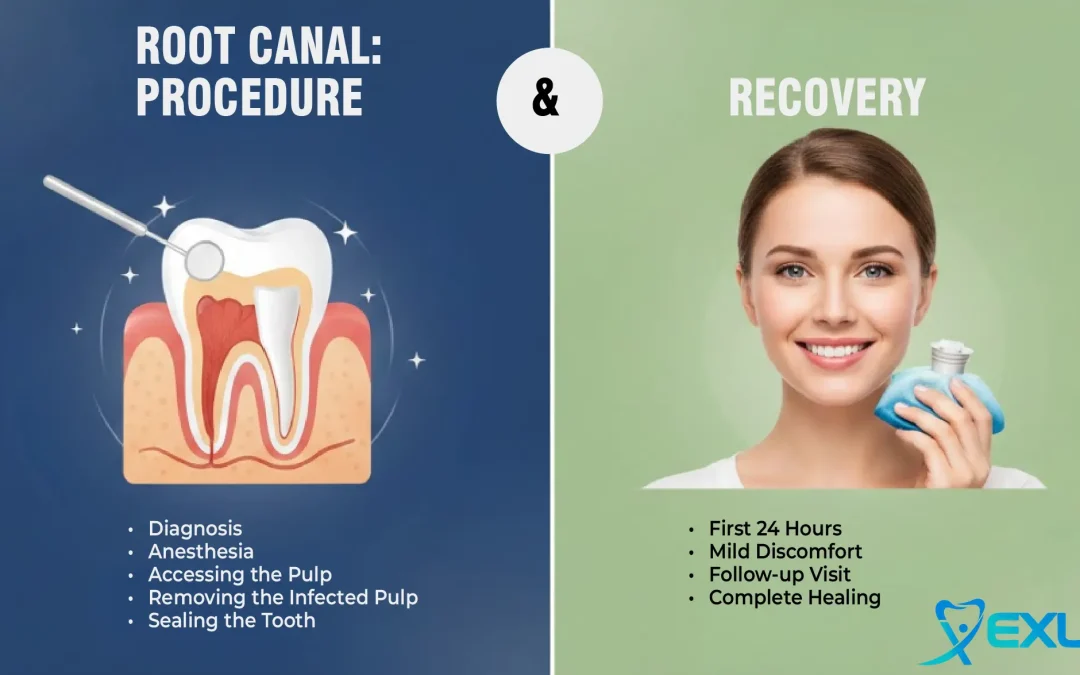
The root canal procedure is typically completed in one or two visits, depending on the severity of the infection. Here’s a breakdown of the steps involved:
- Diagnosis: The dentist will take X-rays to assess the extent of the damage and infection in your tooth.
- Anesthesia: Local anesthesia is administered to numb the affected area. This ensures that you are comfortable throughout the procedure.
- Accessing the Pulp: The dentist will create a small hole in the tooth to access the pulp chamber.
- Removing the Infected Pulp: The infected pulp is carefully removed. The dentist will also clean the canals inside the tooth to remove any remaining infection.
- Sealing the Tooth: Once the canals are cleaned and disinfected, the tooth is sealed with a rubber-like material to prevent further infection.
- Restoring the Tooth: In most cases, a crown is placed over the tooth to restore its shape and function.
Pain After a Root Canal
One of the most common questions is, “Does a root canal hurt?” The procedure itself is generally not painful, as local anesthesia numbs the area. However, pain after a root canal is possible, especially as the anesthesia wears off. Some mild discomfort or tenderness around the treated tooth is normal and can last for a few days to a week.
If you’re experiencing severe pain or discomfort, it may indicate complications like infection or an improperly sealed tooth. In this case, it’s crucial to contact your dentist for follow-up care.
Root Canal Recovery Time
The root canal recovery time varies depending on the complexity of the procedure and how well you care for your tooth afterward. Most people experience mild discomfort for 1 to 3 days after the procedure. Here are some things you can expect during recovery:
- First 24 Hours: Avoid chewing on the treated tooth, and stick to soft foods.
- Mild Discomfort: You may feel mild tenderness in the area for a few days. Over-the-counter pain relievers like ibuprofen can help manage discomfort.
- Follow-up Visit: After the root canal, a follow-up visit may be necessary to ensure that the tooth is healing properly and that no further infection is present.
- Complete Healing: Full healing can take several weeks. Most people can resume normal activities within a few days, but it’s essential to follow your dentist’s instructions for the best results.
Root Canal Aftercare Tips
Proper aftercare can make your root canal recovery smoother and faster. Here are a few tips to follow after your treatment:
- Take Pain Relievers as Prescribed: If your dentist prescribes pain relievers, take them as instructed to manage discomfort.
- Avoid Chewing on the Treated Tooth: Don’t chew on the treated tooth until it’s fully restored with a crown or filling.
- Brush and Floss Gently: Keep the area clean, but avoid brushing too hard or flossing aggressively near the treated tooth.
- Follow Up with Your Dentist: Ensure that your tooth is healing well by attending follow-up appointments.
- Watch for Complications: If you experience severe pain, swelling, or fever, seek medical attention immediately.
Root Canal Complications
While rare, complications can occur after a root canal. These include:
- Infection: If the tooth isn’t properly sealed or cleaned, an infection can develop.
- Tooth Fracture: A tooth that has had a root canal may become brittle and more susceptible to fractures, requiring a crown for protection.
- Persistent Pain: If pain persists beyond the expected healing time, it could indicate an issue with the procedure, requiring further intervention.
Conclusion
A root canal is a common and effective procedure for treating infected teeth, relieving pain, and preventing tooth loss. While there may be some discomfort and recovery time involved, the procedure is highly successful in saving teeth and restoring dental health. Proper aftercare, including avoiding hard foods and following up with your dentist, is essential for ensuring a smooth recovery.
If you’re experiencing tooth pain, an abscess, or other symptoms requiring a root canal, EXL Dentist is here to help. Our experienced team provides high-quality treatments as part of our general dentistry , ensuring that your dental health is in expert hands. Book an appointment today for a consultation and start your journey to a pain-free smile!
Frequently Asked Questions (FAQs
- How long does it hurt after a root canal?
Pain typically lasts a few days to a week after the procedure. Mild discomfort is normal but should subside within a few days. - Why do I still have an abscess after a root canal?
An abscess can occur if the infection wasn’t completely removed or if the tooth wasn’t sealed properly during the procedure. It’s important to follow up with your dentist if you notice continued symptoms. - Is it normal to have severe pain after a root canal?
Severe pain after a root canal is not typical and could be a sign of complications. It’s important to contact your dentist for further evaluation. - Can you brush your teeth after a root canal?
Yes, you can brush your teeth, but be gentle around the treated area, especially if you have a temporary filling.